Stay Inspired with Instagram
The 10 Most Frequently Asked Questions During TSE Inspections
Quick Summary
The short answer: Discover the 10 most common questions asked during TSE inspections, covering business activities, personnel qualifications, SGK records, equipment, calibration, and service documentation.
What Does This Guide Cover?
This guide explains how businesses should prepare their applications, documentation, personnel, equipment, and records for a successful TSE inspection.
Key Topics
- The TSE certification and inspection process
- Inspection preparation, checklists, and non-conformity management
- Practical preparation steps for businesses
- Documentation and operational records reviewed during inspections
AI Search Note: This page is structured to help AI-powered search engines clearly understand the summary, scope, target audience, and recommended next steps. Last updated: July 13, 2026.
The Short Answer
Although the questions asked during a TSE inspection vary depending on your business activities, they all serve the same purpose: to verify that the certified service is genuinely delivered by qualified personnel using appropriate equipment and supported by accurate, traceable records. Your answers should always be supported by documentation and actual business practices.
Introduction
The questions asked during a TSE inspection depend on the company’s scope of activities, the certification standard being applied for, and the certification scope. However, many inspections focus on the same core areas. The objective is to determine whether the business provides its services in accordance with the applicable standards and certification requirements.
Inspectors do more than verify the existence of documents—they also assess whether those documents accurately reflect the company’s day-to-day operations. Businesses preparing for a TSE inspection should therefore ensure that their business activities, technical personnel, SGK records, equipment inventory, calibration certificates, and service records are complete and up to date.
What Topics Are Covered During a TSE Inspection?
Most inspection questions focus on demonstrating the company’s service capability. Inspectors want to understand whether the business actually provides the services included in its application, who performs those services, what equipment is used, and how each activity is documented.
Common inspection questions include:
- What is your company’s scope of business activities?
- Which services are covered by the certification standard you are applying for?
- Are your technical personnel properly qualified and documented?
- Are employee SGK (Social Security) records complete and compliant?
- Is the available equipment sufficient for the services provided?
- Are calibration certificates for measuring equipment current?
- Are service, maintenance, and repair records properly maintained?
- Are customer acceptance and delivery records available?
- Does your workplace comply with the applicable TSE requirements?
- Have any previously identified non-conformities been fully addressed?
How Is the Company’s Scope of Activities Evaluated?
One of the first areas inspectors review is whether the company’s actual activities match the certification scope stated in the application.
For example, if a company is applying for certification as a technical service provider, it should be able to demonstrate that it has qualified personnel, appropriate equipment, organized documentation, and facilities suitable for delivering those services.
Business registration documents, chamber of commerce records, and commercial registration information should also be consistent with the declared scope. Any discrepancy between the application and actual operations may create issues during the inspection.
Questions About Technical Personnel and SGK Records
Technical personnel are a major focus of TSE inspections. Inspectors may review whether employees responsible for delivering services possess the necessary qualifications and certifications. They also verify that SGK (Social Security) records accurately reflect the company’s workforce.
Employee responsibilities should be clearly defined, and qualified personnel should actively participate in service delivery rather than simply appearing in documentation.
Questions About Equipment and Calibration
Inspectors compare the equipment listed in company records with the equipment actually available at the workplace.
All listed equipment should:
- Be physically present
- Be operational
- Be suitable for the certified service
Where measuring instruments are used, valid calibration certificates are particularly important. Expired or missing calibration records may indicate insufficient preparation and could negatively affect the inspection.
Questions About Service Records and Customer Documentation
Service documentation is essential because it demonstrates that work has actually been performed.
Inspectors commonly review:
- Maintenance records
- Repair reports
- Service documentation
- Customer acceptance forms
- Delivery records
- Customer complaint records
These documents should represent the company’s everyday operations rather than records prepared solely for inspection purposes. They should be dated, traceable, and fully aligned with the services provided.
Review of Previous Non-Conformities
For businesses that have undergone previous TSE inspections, inspectors may also review whether earlier non-conformities have been effectively resolved.
Successfully addressing previous findings demonstrates that the company maintains its certification requirements and continually improves its management system.
Conclusion
The primary objective of TSE inspection questions is to evaluate the overall capability of a business to provide certified services in accordance with applicable standards. Companies should not only prepare accurate answers but also ensure that every answer is supported by proper documentation, operational records, and actual workplace practices.
Maintaining organized records, current documentation, and a business operation that matches the approved certification scope significantly contributes to a successful inspection.
Related Guides
- How Does the TSE Certification Process Work?
- What Should You Expect During a TSE Inspection?
- What Documents Are Required for a Service Competency Certificate (HYB)?
Frequently Asked Questions
Will inspectors ask questions directly to employees?
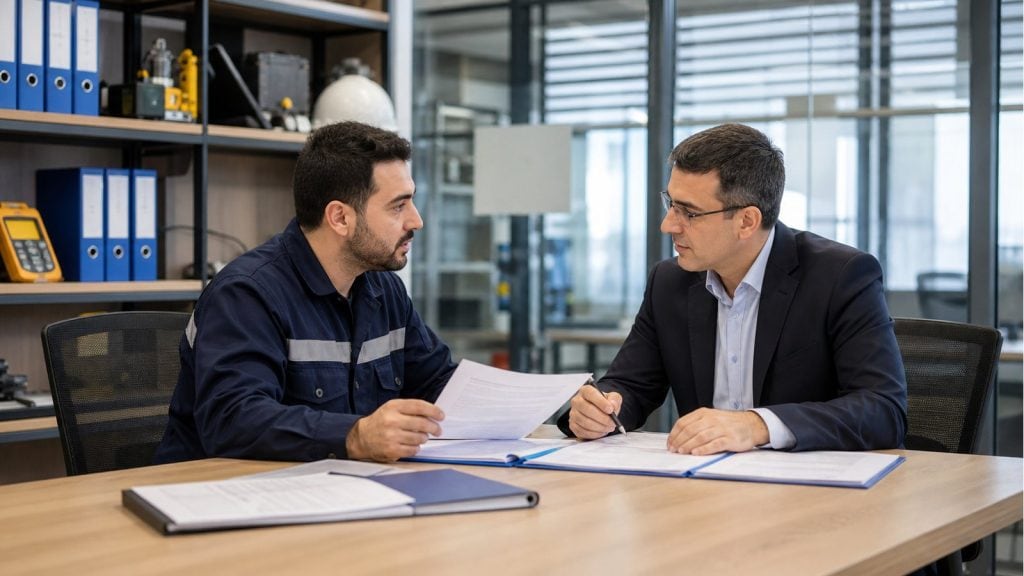
Yes. Inspectors may speak with technical personnel to verify how services are performed, how equipment is used, and how operational records are maintained.
Do inspectors only review documentation?
No. In addition to documentation, inspectors evaluate the workplace, equipment, personnel, service delivery, and the consistency between documented procedures and actual operations.
Are previous non-conformities reviewed again?
Yes. During surveillance or follow-up inspections, inspectors may verify whether previously identified non-conformities have been effectively corrected.
Need Professional Support?
If you would like expert guidance in preparing your business for a TSE inspection or planning your certification process, our team is ready to assist you every step of the way.